









Clients are the epicenter of your business no matter what kind of services you provide or what kind of industry you are operating in. Your Clients inspire you to come up with new products or services and are the one who bring your revenue. To understand your customers better, you should first know the benefits of using a CRM for your business.
What is CRM?
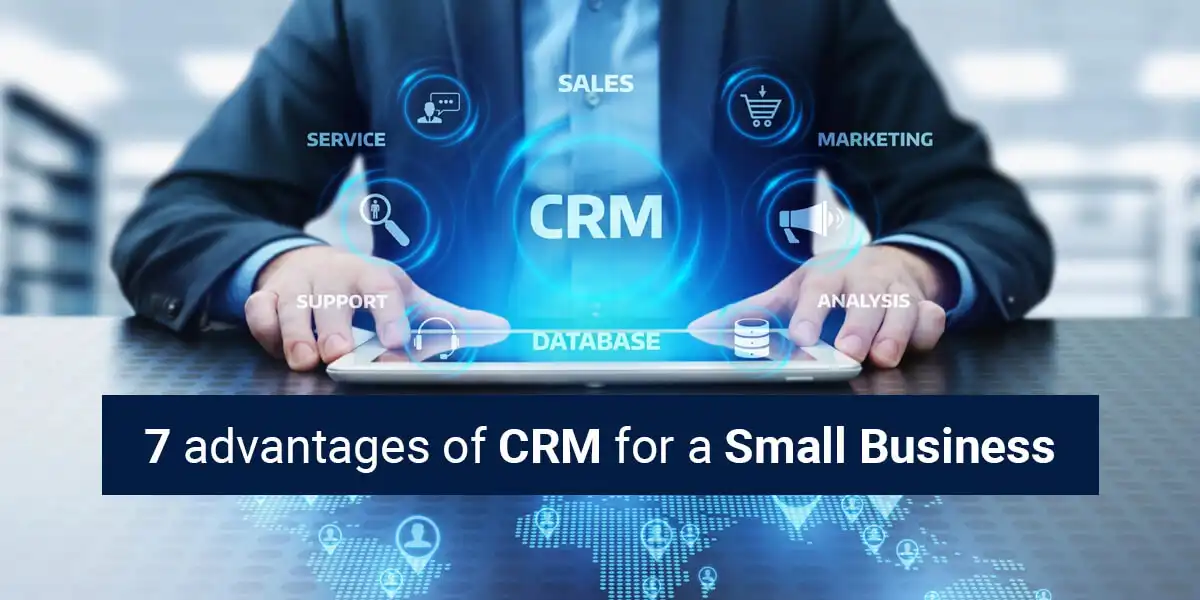
CRM or Customer Relationship Management is an approach for managing your company’s interactions and relationship with the current and potential customers. CRM systems can provide the customer-facing employees detailed information on the potential and current customer’s purchase history, buying behaviors and their personal information.
Who Needs CRM?
CRM is built for all businesses no matter their size. Businesses that are small but fast growing, businesses offering different product lines, businesses with different customer segments are few of the major types of businesses where CRM plays an important role.
How Can CRM Help Small A Business?
A strong CRM would help in getting more information about your customers, increase your revenue thus scaling your business. Let’s see the advantages of using a CRM software for a small business.
Help in Organizing data
A CRM software can help in storing all the customers information at one place. You’ll have access to data that can help in your interactions with the customers and can help in capturing all the interactions with your customers to provide better insights into their behaviours. This would help in understanding your customers better, eventually leading to increase in revenue.
Better data Reporting & Analysis
Most of the CRM systems create reports based on the data gathered by the software. It helps in avoiding data miscalculations. You can also personalize the dashboard as per your viewing requirements. This ability to create reports and storing customer data will enable better decisions.
Automation
With the ability to store the information at one place, the CRM would reduce the time required to perform the tasks considerably. This would enable to have smoother interactions with the customers in turn generating more revenue for your business efficiency.
Enhanced Team Collaboration
Most of the CRM systems are built to allow collaboration within teams. When one team member interacts with a customer, all the information that is inputted by the team member can be accessed by other team members.
Effective Communication
CRM software can help build better communication systems between members of a team and inter departmental teams. Team members can share information about several customers, share data with each other using CRM. Data can also be shared with different departments across the organization and can help in decision making processes.
Improved Marketing Strategies
Being able to understand the needs of your customers- their buying preferences and patterns using CRM, you can device your marketing plans accordingly. With all the information about your customers in one place, you can segment them and understand where they stand in the buying process. Once you have this information you can plan your marketing activities accordingly. Your company can have different promotional campaigns planned for different customers based on the data stored in the CRM.
Increased Customer Satisfaction
Using the CRM you’ll have all the information about your customers, their purchase history, buying preferences and issues if they have faced any. This would help in solving any issues faced by the customers and keep them happy. Using the information used in CRM, your can plan activities to keep your customers engaged and satisfied.
Overall, Having a CRM software would enable you to store information of your customers intelligently providing an organized workflow to make better business decisions for your organizations.
Ready to organize your customer data and boost efficiency?
Get a CRM solution built for SMBs – easy to use, scalable, and powered by Microsoft Dynamics 365.
FAQs
What Core Advantages Does CRM Software Deliver to Small Business Owners?
The CRM for small business benefits are wide-ranging, but the most impactful is having all customer information stored in one accessible place. Rather than hunting through emails, spreadsheets, and sticky notes, your team accesses a unified record of every interaction. Small businesses using Microsoft Dynamics 365 for small business report that this single change alone saves hours each week. Beyond organisation, CRM platforms provide automated follow-up reminders, pipeline visibility, and sales forecasting that would otherwise require expensive dedicated staff. Owners gain real-time insight into what's working, which customers are most valuable, and where revenue is likely to come from next quarter.
Is Professional CRM Software Affordable for Smaller Operations?
Cost is a common concern, but the CRM for small business market has evolved dramatically. Cloud-based subscription models mean no large upfront investment — instead, you pay monthly per user, scaling up or down as your team changes. Entry-level tiers from major vendors now include core contact management, deal tracking, and basic automation at price points accessible even to solo operators. When calculating true cost, factor in the time saved on manual tasks, reduced missed follow-ups, and improved close rates. Most small businesses find that a CRM pays for itself within the first quarter through recovered deals and efficiency gains alone.
How Does Centralised Contact Management Improve Sales Results?
When every team member can see the full history of a customer relationship, conversations become more relevant and timely. A sales rep returning from holiday doesn't spend the first hour catching up — the CRM shows every email, call note, and deal stage update automatically. This continuity builds trust with customers who no longer have to repeat themselves. Centralised contact management also enables smarter segmentation: you can identify which customers haven't been contacted in 90 days, which leads opened your last email, and which accounts are approaching renewal. Acting on that intelligence consistently is what separates growing businesses from stagnant ones.
What Long-Term Benefits Can Small Businesses Expect from CRM?
Beyond the immediate efficiency gains, the long-term CRM for small business benefits compound over time. Every interaction logged becomes part of a searchable knowledge base that new team members can learn from. Customer patterns emerge — seasonal buying cycles, preferred communication channels, common objections — that inform smarter marketing and product decisions. Over years, a well-maintained CRM becomes one of your most valuable business assets, holding institutional knowledge that doesn't walk out the door when staff leave. Businesses that commit to CRM discipline typically outperform competitors in customer retention, referral rates, and lifetime customer value.
Which Platform Features Matter Most for Growing Sales Teams?
For a small but growing sales team, the most critical platform features are pipeline management, activity tracking, and email integration. Pipeline management gives leadership instant visibility into deal stages and probable close dates. Activity tracking ensures no follow-up falls through the cracks by surfacing tasks, calls, and meetings that need attention. Email integration means correspondence is automatically logged against contacts without manual data entry. As teams grow, look for features like territory management, quota tracking, and customisable dashboards that let individual reps focus on their own numbers while managers see the complete picture.
How Can Automated Workflows Improve Marketing Campaign Results?
Automation removes the bottleneck of manual execution from marketing campaigns. When a new lead fills out a contact form, an automated workflow can immediately send a welcome email, assign the lead to the right sales rep, and schedule a follow-up task — all without human intervention. As campaigns become more sophisticated, automation handles lead nurturing sequences, re-engagement emails for dormant contacts, and event-triggered messages based on specific customer behaviour. The result is consistent, timely communication at scale that a small team could never execute manually. Marketing ROI improves because every lead gets the right message at the right moment.
Can the Same Platform Work Across Different Industry Types?
Modern CRM platforms are designed with industry flexibility in mind. A real estate agency, a professional services firm, and a retail operation all have fundamentally different sales cycles and customer relationships, yet all benefit from the same core capabilities — contact management, pipeline tracking, and communication logging. The difference lies in configuration: custom fields capture industry-specific data, custom stages reflect unique sales processes, and industry-specific integrations connect the tools each sector relies on. Many platforms offer industry templates that accelerate setup, giving businesses a pre-built foundation they can customise rather than building from scratch.
How Do You Choose and Implement the Right CRM for Your Team?
Selecting the right platform starts with mapping your actual sales process before evaluating any software. Document how leads enter your pipeline, what information you need at each stage, and which handoffs happen between team members. This process map becomes your evaluation checklist — if a CRM can't replicate your workflow, it will create friction rather than remove it. Prioritise platforms with strong mobile apps if your team is field-based, and look for robust import tools if you're migrating existing data. Implementation success with any CRM for small business benefits requires ongoing coaching, not just a one-time training session — budget for this from day one. Explore our Power Apps development services, Microsoft Copilot Studio, and nonprofit CRM solutions to extend your platform further.